PCOS is a complex hormonal disorder that affect somewhere 1 from 10 women . this lead irregular periods ,extra body hair ,,weight gain acne , tinning hair and infertility many women don`t that they have PCOS until they have trouble getting pregnant or experiences unexplained weight gain
The good news is that you do not need a complicated diet or a list of expensive foods to get started. A balanced and sustainable PCOS diet plan for beginners can focus on regular meals, nutritious foods, adequate protein, fiber-rich carbohydrates, healthy fats, fruits, vegetables, and enough water.
PCOS doesn’t require a complicated or restrictive diet — the basic approach is to build balanced meals with a mix of protein, fiber-rich carbohydrates (like whole grains, legumes, and millets, not eliminated carbs), vegetables, fruits, and healthy fats, using familiar foods like dal, roti, rice, curd, paneer, eggs, and beans rather than expensive “superfoods.” It’s best to limit (not completely avoid) added sugar and highly processed or fried foods, avoid skipping meals or crash dieting, and pair good nutrition with regular exercise, adequate sleep, and stress management; since PCOS affects everyone differently, small sustainable changes over time work better than extreme plans, and a doctor or dietitian can help personalize the approach.
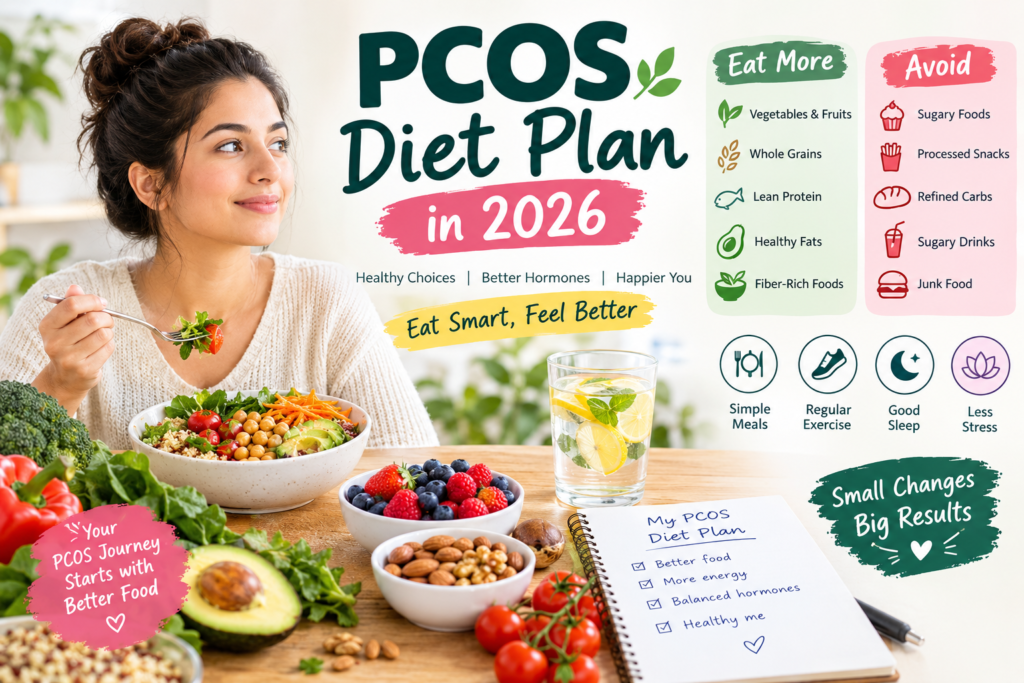
What Is PCOS?
PCOS stands for Polycystic Ovary Syndrome. It is a hormonal and metabolic condition that can affect people with ovaries, particularly during the reproductive years.
PCOS can be associated with symptoms such as:
- Irregular or unpredictable menstrual periods
- Higher levels of certain androgens
- Acne or oily skin
- Increased facial or body hair
- Hair thinning
- Changes in blood sugar regulation
- Difficulty with ovulation
- Changes in body weight or body composition
Not everyone with PCOS experiences the same symptoms. PCOS is also not simply a problem caused by food or body weight.
Because PCOS can affect different people differently, nutrition should be individualized. If you have been diagnosed with PCOS, a doctor or registered dietitian can help you choose an eating pattern that fits your health needs.
PCOS Diet Plan for Beginners: Where to Start
Starting a new eating routine can feel overwhelming. You may find hundreds of different PCOS diet plans online, but you do not need to follow an extreme plan.
Instead, begin with a few basic principles.
1. Build Balanced Meals
A simple way to start your PCOS diet plan is to make your meals balanced.
Try to include:
- A source of protein
- Vegetables or fruit
- A source of high-fiber carbohydrates
- A source of healthy fat
For example, an Indian-style meal could include dal, vegetables, roti or brown rice, and curd.
Another simple option could be eggs with vegetables and whole-grain toast.
The exact portions will depend on your individual nutritional needs, activity level, age, health status, and goals.
2. Do Not Completely Remove Carbohydrates
One common mistake beginners make is eliminating carbohydrates completely.
Carbohydrates are an important source of energy. Instead of avoiding all carbohydrates, focus on choosing more nutrient-dense and fiber-rich sources.
Good options can include:
- Oats
- Whole-wheat roti
- Brown rice
- Quinoa
- Barley
- Millets
- Beans
- Lentils
- Chickpeas
- Fruits
- Vegetables
Pairing carbohydrates with protein, fiber, and healthy fats can make meals more balanced.
Why Fiber Matters
Fiber can help support digestive health and can also contribute to better blood sugar management.
Fiber-rich foods include vegetables, fruits, legumes, whole grains, nuts, and seeds.
If you currently eat very little fiber, increase it gradually and drink enough fluids.
Foods to Include in a PCOS Diet Plan
A good PCOS diet plan for beginners should be varied rather than focused on only a few “superfoods.”
Protein-Rich Foods
Protein is an important part of a balanced diet.
Depending on your dietary preferences, options include:
- Eggs
- Chicken
- Fish
- Curd or yogurt
- Milk
- Paneer
- Tofu
- Soy products
- Dal
- Rajma
- Chickpeas
- Beans
- Lentils
- Nuts and seeds
Including a protein source in your meals can make them more satisfying and nutritionally balanced.
Vegetables
Vegetables provide fiber, vitamins, minerals, and other beneficial plant compounds.
Try to include a variety of vegetables such as:
- Spinach
- Carrots
- Tomatoes
- Broccoli
- Cauliflower
- Capsicum
- Beans
- Cabbage
- Cucumber
- Pumpkin
- Bottle gourd
- Okra
- Peas
You do not need to eat only salads. Cooked vegetables, soups, curries, stir-fries, and other preparations can all be part of a balanced diet.
Fruits
There is generally no need to completely avoid fruit because of PCOS.
Choose a variety of whole fruits, such as:
- Apples
- Oranges
- Guava
- Papaya
- Berries
- Pomegranate
- Pears
- Bananas
- Melons
Whole fruit provides fiber and nutrients. If you enjoy fruit juice, remember that juice generally provides less fiber than eating the whole fruit.
Nuts and Seeds
Nuts and seeds can be useful additions to a balanced PCOS diet plan.
Examples include:
- Almonds
- Walnuts
- Peanuts
- Pumpkin seeds
- Chia seeds
- Flaxseeds
- Sunflower seeds
They provide healthy fats, protein, fiber, vitamins, and minerals.
Because nutritional needs differ between individuals, portions should fit your overall diet.
PCOS Diet Plan for Beginners: Simple Indian Meal Ideas
If you live in India, you do not have to replace traditional foods with expensive “PCOS foods.”
A practical PCOS diet plan for beginners can include familiar Indian meals.
Breakfast Ideas
Some balanced breakfast options include:
Option 1: Vegetable Oats
Prepare oats with vegetables and add a protein source such as curd, eggs, or another suitable option.
Option 2: Besan Chilla
Besan chilla with vegetables can provide protein and fiber. You can pair it with curd or another nutritious side.
Option 3: Vegetable Poha
Poha can be combined with vegetables, peanuts, and a protein-rich side to create a more balanced breakfast.
Option 4: Eggs and Whole-Grain Toast
Eggs with vegetables and whole-grain toast can be a simple breakfast for people who eat eggs.
Option 5: Idli and Sambar
Idli with sambar and vegetables can be part of a balanced breakfast. Sambar provides lentils and vegetables.
Lunch Ideas for a PCOS-Friendly Diet
Lunch does not have to be complicated.
Meal Idea 1
- Dal
- Roti
- Mixed vegetables
- Curd
- Salad or another vegetable
Meal Idea 2
- Rajma
- Brown rice or another whole grain
- Vegetable salad
- Curd
Meal Idea 3
- Roti
- Paneer or tofu
- Cooked vegetables
- Curd
Meal Idea 4
- Chickpea salad
- Roti
- Vegetable curry
- Curd
The idea is to create a meal containing a combination of protein, carbohydrates, vegetables, and healthy fats.
Healthy Snack Ideas for PCOS
Snacks can also fit into a PCOS diet plan.
Try options such as:
- A whole fruit with nuts
- Plain curd with fruit
- Roasted chickpeas
- Sprouts
- A small portion of nuts and seeds
- Vegetable sandwich
- Boiled eggs
- Homemade yogurt-based snack
You do not have to snack if you are not hungry. Your eating schedule should depend on your individual needs and routine.
Dinner Ideas
Dinner can follow the same balanced-meal approach.
Examples include:
Option 1
Roti + dal + vegetables + curd
Option 2
Paneer or tofu + vegetables + roti
Option 3
Fish or chicken + vegetables + rice or roti
Option 4
Khichdi with vegetables + curd
Option 5
Dal + millet or brown rice + vegetables
The goal is not to make dinner extremely small or skip meals. A balanced dinner can be part of a healthy routine.
Foods to Limit in a PCOS Diet Plan
Having PCOS does not mean you can never eat your favorite foods.
Instead of creating a long list of forbidden foods, focus on reducing foods that provide lots of added sugar, sodium, or highly refined carbohydrates while offering fewer nutrients.
These may include:
- Sugary soft drinks
- Frequent sweets and desserts
- Highly processed snacks
- Sugary breakfast cereals
- Frequent deep-fried foods
- Highly refined snack foods
- Excessive sugary beverages
- Large amounts of highly processed foods
The key word is frequency.
Eating a dessert occasionally does not automatically make your diet unhealthy. A sustainable diet should allow flexibility.
Should You Stop Eating Sugar Completely?
Usually, completely eliminating sugar is unnecessary.
Instead, pay attention to your overall intake of added sugars. Sweetened drinks, desserts, packaged snacks, and other foods can add significant amounts of sugar to the diet.
If you enjoy something sweet, having it occasionally as part of an otherwise balanced eating pattern can be more realistic than following an extremely restrictive plan.
Does a PCOS Diet Mean You Have to Lose Weight?
No.
PCOS affects people of different body sizes, and nutrition should not be reduced to weight loss.
For some people with PCOS, improving food quality, physical activity, sleep, and metabolic health may be important. For others, the focus may be on menstrual health, adequate nutrition, energy, or other symptoms.
A healthcare professional can help determine what goals are appropriate for you.
Avoid crash diets, prolonged fasting, severe calorie restriction, or eliminating major food groups without professional guidance.
A Simple 7-Day PCOS Diet Plan for Beginners
The following is an example meal structure, not a personalized medical diet. Individual nutritional requirements vary.
Day 1
Breakfast: Vegetable oats + curd
Lunch: Dal + roti + mixed vegetables
Snack: Apple + small serving of nuts
Dinner: Paneer/tofu + vegetables + roti
Day 2
Breakfast: Besan chilla + curd
Lunch: Rajma + rice + vegetables
Snack: Roasted chickpeas + fruit
Dinner: Dal + roti + vegetables
Day 3
Breakfast: Vegetable poha + curd
Lunch: Chickpea curry + roti + vegetables
Snack: Fruit + nuts
Dinner: Paneer/tofu + vegetables + roti
Day 4
Breakfast: Eggs + whole-grain toast + vegetables
Lunch: Dal + rice + vegetables + curd
Snack: Sprouts or roasted chickpeas
Dinner: Vegetable khichdi + curd
Day 5
Breakfast: Idli + sambar
Lunch: Roti + paneer/tofu + vegetables
Snack: Fruit + nuts
Dinner: Dal + roti + vegetable curry
Day 6
Breakfast: Vegetable upma + curd
Lunch: Rajma or chickpeas + rice + vegetables
Snack: Yogurt + fruit
Dinner: Roti + dal + vegetables
Day 7
Breakfast: Besan chilla + vegetables + curd
Lunch: Dal + roti + vegetables + salad
Snack: Fruit + nuts
Dinner: Vegetable khichdi + curd
This example shows that a PCOS diet plan for beginners does not have to be complicated, expensive, or completely different from regular home-cooked food.
Lifestyle Habits That Can Support PCOS Management
Food is only one part of managing PCOS.
Regular Physical Activity
Regular movement can support overall health and metabolic health.
You can choose activities you enjoy, such as:
- Walking
- Cycling
- Dancing
- Swimming
- Strength exercises
- Yoga
- Sports
You do not need to exercise excessively. Consistency is generally more useful than trying to follow an extreme workout routine.
Get Enough Sleep
Sleep is an important part of overall health.
Try to maintain a consistent sleep and wake schedule and create a relaxing bedtime routine.
If you regularly have difficulty sleeping or feel excessively tired, discuss it with a healthcare professional.
Manage Stress
Stress is a normal part of life, but ongoing high stress can affect overall well-being.
Simple strategies may include:
- Walking
- Journaling
- Breathing exercises
- Spending time with friends and family
- Hobbies
- Relaxation exercises
- Taking regular breaks from screens
Choose strategies that are realistic for your daily routine.
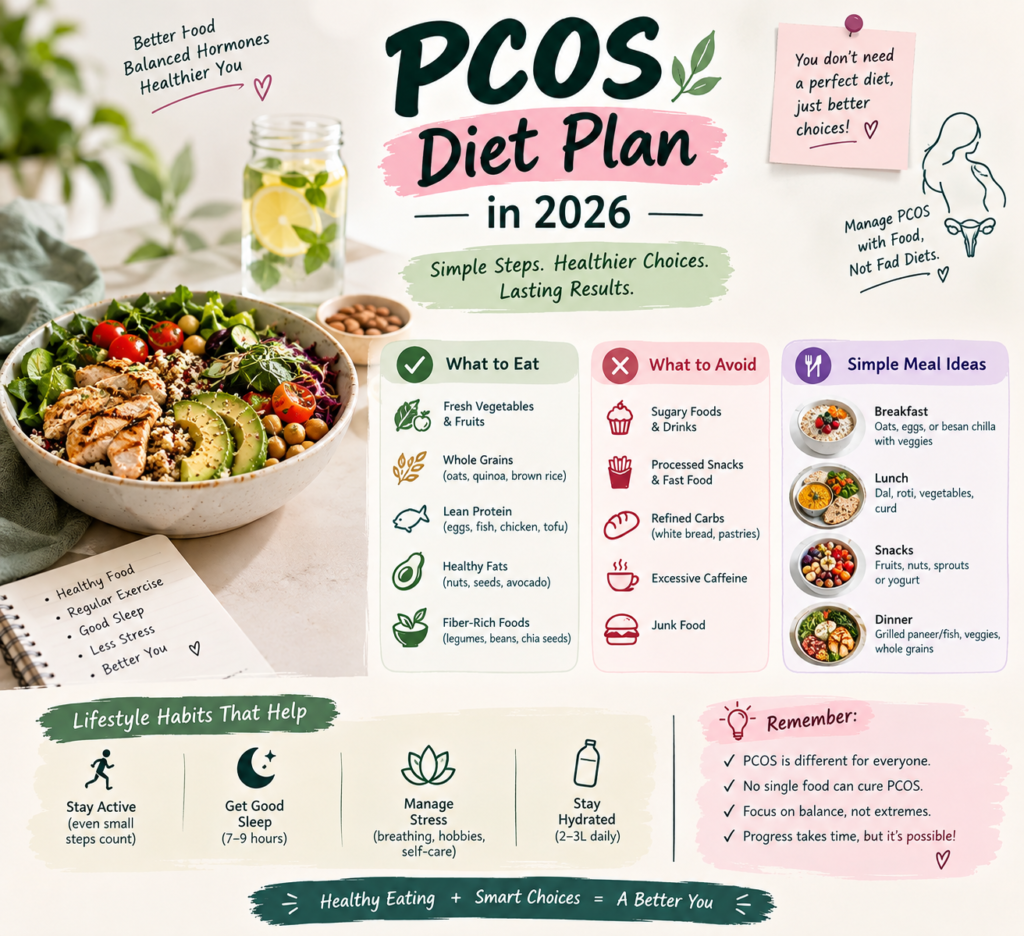
Common Mistakes Beginners Make With a PCOS Diet
Starting a new diet can sometimes lead to unnecessary restrictions.
Mistake 1: Cutting Out All Carbohydrates
Carbohydrates are not automatically unhealthy. Choose more fiber-rich carbohydrate sources and balance them with protein and other nutrients.
Mistake 2: Following an Extremely Restrictive Diet
A diet that is difficult to maintain may not be helpful in the long term.
Focus on habits you can realistically continue.
Mistake 3: Believing One Food Can Cure PCOS
There is no single food that cures PCOS.
A combination of nutrition, physical activity, sleep, medical care, and other lifestyle factors may contribute to overall management.
Mistake 4: Skipping Meals to “Control” PCOS
Skipping meals is not necessary for managing PCOS and may make it harder for some people to meet their nutritional needs.
Mistake 5: Copying Someone Else’s Diet
A diet that works for one person may not be appropriate for another.
Your nutritional needs can depend on your age, health, medications, activity, dietary preferences, and other factors.
How to Make Your PCOS Diet Plan Sustainable
The best PCOS diet plan is one that you can realistically follow.
Start with small changes rather than changing everything overnight.
For example:
Week 1: Add more vegetables to your meals.
Week 2: Include a protein source with breakfast.
Week 3: Replace some sugary drinks with water or unsweetened beverages.
Week 4: Add more whole grains and legumes.
Small changes can gradually become everyday habits.
Keep Your Meals Simple
You do not need special recipes every day.
A simple plate containing a protein source, vegetables, a high-fiber carbohydrate, and a healthy fat can be enough.
Use foods that are already available at home.
Plan Your Meals
Planning meals ahead can make healthy choices easier.
You can prepare ingredients such as:
- Cooked dal
- Boiled chickpeas
- Chopped vegetables
- Homemade curd
- Cooked grains
- Roasted snacks
This can reduce the temptation to rely on highly processed convenience foods when you are busy.
Conclusion
Starting a PCOS diet plan for beginners does not mean following a strict or complicated diet. You do not need to remove all carbohydrates, avoid every sweet food, or depend on expensive “PCOS superfoods.”
Instead, focus on building balanced meals with vegetables, fruits, fiber-rich carbohydrates, protein, and healthy fats. Traditional home-cooked foods such as dal, roti, rice, vegetables, curd, beans, chickpeas, paneer, tofu, eggs, and other nutritious foods can all have a place in a balanced eating pattern.
Remember that PCOS is different for everyone. Your symptoms, nutritional needs, lifestyle, and medical history may require an individualized approach. If you have PCOS or think you may have it, speak with a qualified healthcare professional or registered dietitian for personalized guidance.
The most effective PCOS diet plan is not necessarily the strictest one—it is the one that supports your health and that you can maintain consistently over time.
At Rise by Shivangi, we believe that managing PCOS starts with simple, sustainable lifestyle and nutrition choices tailored to your individual needs.
Frequently Asked Questions About PCOS Diet Plan
1. What is the best diet for PCOS?
There is no single “best” diet for everyone with PCOS. A balanced eating pattern containing vegetables, fruits, whole grains, legumes, protein-rich foods, and healthy fats can be a good foundation.
2. Can I eat rice if I have PCOS?
Yes. Rice can be included in a PCOS-friendly diet. You can combine it with protein such as dal, rajma, chickpeas, fish, chicken, tofu, or paneer and include vegetables with the meal.
3. Can I eat roti with PCOS?
Yes. Roti can be part of a balanced PCOS diet plan. Whole-wheat roti can provide carbohydrates and fiber and can be paired with vegetables and a protein source.
4. Which fruits are good for PCOS?
Most whole fruits can fit into a balanced diet. Apples, guava, oranges, papaya, berries, pears, pomegranate, and bananas are examples. Whole fruit is generally preferable to fruit juice because it provides more fiber.
5. Should I avoid sugar completely with PCOS?
Complete avoidance is usually unnecessary. Instead, focus on limiting frequent consumption of foods and drinks high in added sugar while maintaining an overall balanced diet.
6. Can I drink milk if I have PCOS?
Milk can be part of a balanced diet for many people. However, individual tolerance and dietary requirements vary. If you experience symptoms after consuming dairy, discuss your options with a healthcare professional.
7. Is fasting good for PCOS?
Fasting is not necessary for managing PCOS. Some people may choose specific eating schedules for personal reasons, but restrictive fasting should not be started without considering individual nutritional needs and medical advice.
8. Can exercise help with PCOS?
Regular physical activity can support overall health and may be beneficial for metabolic and cardiovascular health. Walking, strength training, cycling, swimming, yoga, and other enjoyable activities can all be considered.
9. How long does a PCOS diet plan take to work?
There is no fixed timeline. PCOS is a long-term condition, and changes in symptoms can vary from person to person. Nutrition should be viewed as part of an ongoing healthy lifestyle rather than a quick fix.
10. Can a PCOS diet cure PCOS?
There is currently no specific diet that cures PCOS. A balanced diet and healthy lifestyle can support overall health and may help with some aspects of PCOS management, but medical guidance may also be necessary.
11. Can I eat outside food while following a PCOS diet?
Yes. Eating outside occasionally can fit into a balanced lifestyle. When possible, choose meals containing vegetables and protein and avoid making highly processed or sugary foods the main part of your everyday diet.
12. What should I eat first when starting a PCOS diet?
Start simple. Add more vegetables, include a protein source in your meals, choose fiber-rich carbohydrates more often, drink enough water, and reduce frequent sugary drinks and highly processed foods.